Labelled robot video, back before your next training run.

Send your recordings. Talo returns boxes, tracksA box drawn around one hand or object in every frame, kept under the same name from start to end., action segmentsA stretch of time with one action name, such as grasp or pour, and exact start and end times. and task descriptions in the schemaThe file layout and field names your training code already expects. your pipeline already reads.

Before
Before. A raw frame, as you would send it.
After right hand bottle cup action: pour
After. Object tracks and an action label, from the sample below. right handbottlecup

Problem

Robot experiments stall while recordings wait for labels.

Ten hours of footage is 1,080,000 frames to label.

That is 36,000 seconds at 30 fps. Each frame needs boxes, tracks or an action label before training can start.

Labels come back with no rules and no check record.

So you can't tell which labels to trust, or cite how they were made.

Every export needs converting.

Someone on the team rewrites the vendor's format before the pipeline can read it.

How it works

Labelling moves off your team's desk.

Today

  1. Record
  2. Wait for labelsStall
  3. Convert formatStall
  4. Train

With Talo

  1. Record
  2. Talo labels, checks and formats

    Label. Boxes, tracks, action segments and task descriptions.

    Check. Checked against the rules you agreed, with a check log.

    Format. Delivered in the schema your pipeline already reads.

  3. Train
  1. 1

    Send a brief

    Robot, tasks, the labels you need and a few sample recordings.

  2. 2

    Agree the rules

    We write labelling rules with you: action names, where each segment starts and ends, and what counts as a failure.

  3. 3

    Check a pilot batch

    We label a small batch. You review it against the rules before any larger order.

  4. 4

    Receive each batch

    Labels in your schema, with the rules and a check log.

One episode, as delivered

Pick up the bottle with the right hand and pour water into the cup.

  1. grasp0.0 to 2.5 s
  2. tilt2.5 to 4.5 s
  3. pour4.5 to 6.5 s
  4. return6.5 to 8.0 s
  • Tracks right hand, bottle, cup
  • Segments 4, contiguous, no overlap
  • Check 28 frames, 9 corrections logged
"segments": [
  { "start_s": 0.0, "end_s": 2.5,
    "action": "grasp",
    "description": "Right hand closes on the bottle." },
  ...
],
"review": {
  "frames_checked": 28,
  "threshold_px": 4,
  "corrections": [ ... ]
}
From the sample below. Field names follow your schema; this file uses Talo's default.

Who it's for

Teams that train manipulation policies on video.

Academic robotics labs

Your students run experiments while Talo labels the frames.

You send
TeleoperationA person drives the robot remotely while its cameras and joints are recorded. or egocentricFilmed from the person's own eye line, usually with a head-mounted camera. recordings, and the labels your paper or policy needs.
You get
Tracks, action segments and task descriptions, with the rules written down so the method section can cite them.
Common start
Clearing a backlog, or re-labelling an existing dataset to a new action list.

Humanoid and robotics startups

Labels that keep pace with your robots and your data vendors.

You send
Recordings from your robots or vendors, and the schema your training code reads.
You get
Tracks, action segments and task descriptions, delivered in your training format.
Common start
A pilot batch on two or three tasks.

Sample

Check our work before you talk to us.

A demonstration clip labelled by Talo for this site; not customer work.
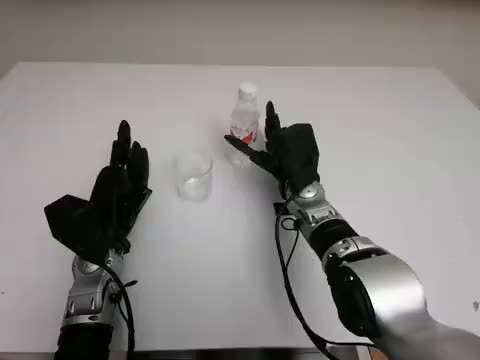
First frame of the sample clip: a robot hand holding a bottle beside a cup.

Pour water, head camera

Task description

Labels by Talo, checked in a second pass by the same annotator and not independently reviewed.

Case study

How a research lab got months of labelling done in weeks.